Best Private Student Loan Lenders of 2026: Top 7 Compared
The best private student loan lenders of 2026 compared — Sallie Mae, College Ave, Earnest, Ascent, SoFi, Citizens, and ELFI — plus private vs. federal loans and how to lock the lowest rate.
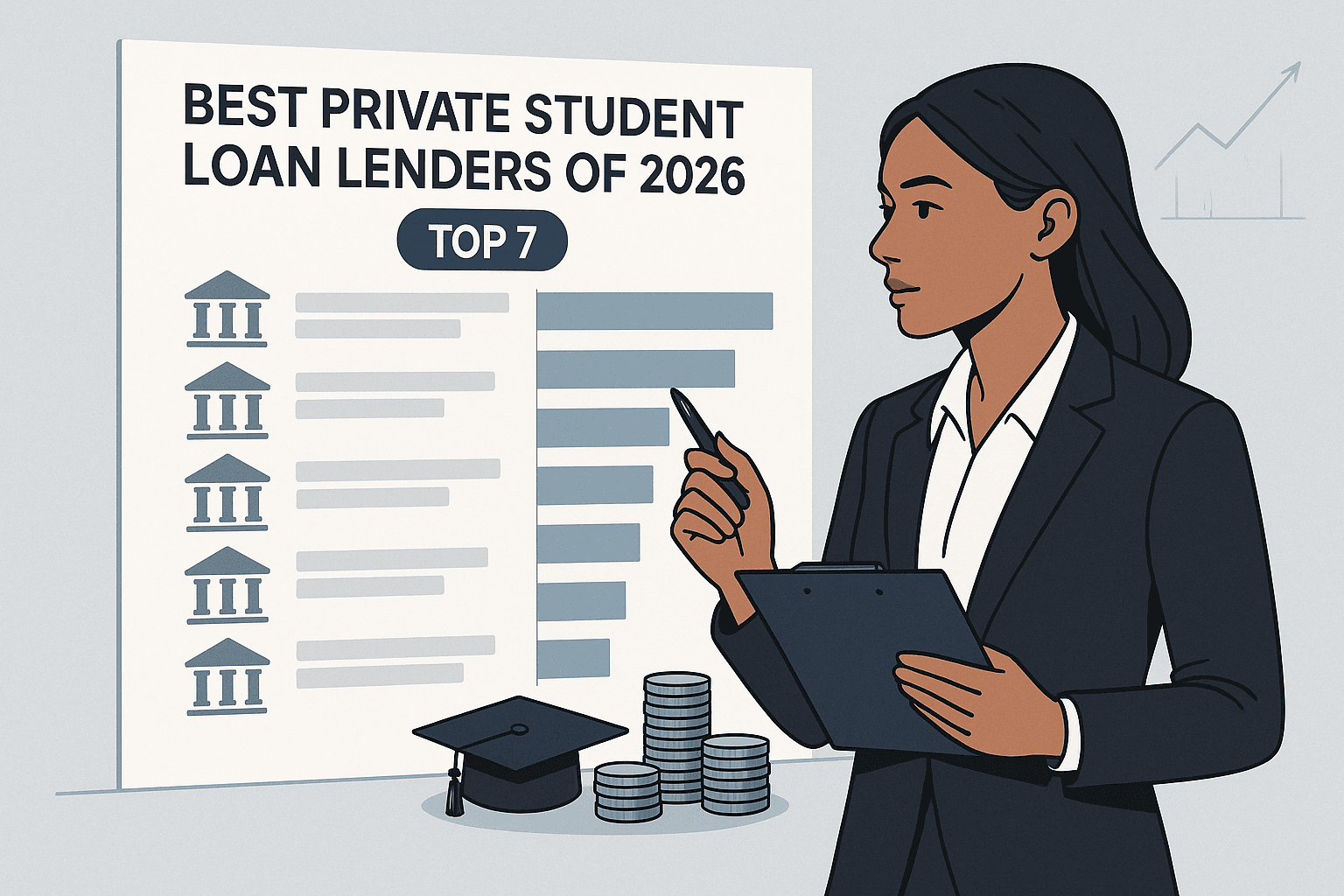
Private student loans should be your backup, not your first stop (learn more about roth ira conversion strategy 2026: 7 steps to tax-free retirement income). Max out federal aid first — submit the FAFSA, take grants, scholarships, and federal Direct Loans — because those carry fixed rates, income-driven repayment, and forgiveness options private lenders cannot match. But with ongoing FAFSA processing disruptions in 2026 and rising tuition, more families are filling the gap with private loans. Here are the seven lenders worth comparing.
How to compare private student loans
Look past the teaser APR. Compare the fixed rate (not just variable), whether there are origination or application fees, cosigner release terms, in-school repayment options, and hardship/forbearance protections. Always get quotes from three or more lenders — a soft credit check for prequalification will not hurt your score.
1. Sallie Mae — Best for undergraduates without strong credit
Sallie Mae is the largest private student lender and approves many undergrads with a creditworthy cosigner. It offers multiple in-school repayment options and no origination fee, though it lacks a formal cosigner release on some products. A solid default for first-time borrowers.
2. College Ave — Best for flexible repayment terms
College Ave lets you customize your term (5–15 years) and repayment style, with a fast online application and no application or origination fees. Strong choice for borrowers who want to tailor monthly payments.
3. Earnest — Best for skipping a payment / borrower-friendly terms
Earnest offers no fees, a nine-month grace period, and the ability to skip one payment per year. Its precision pricing and merit-based underwriting reward strong applicants with competitive rates.
4. Ascent — Best for students without a cosigner
Ascent is one of the few lenders offering outcomes-based and non-cosigned loans to eligible juniors and seniors, judging on factors beyond credit history. Best for independent students who lack a cosigner.
5. SoFi — Best for member perks and no fees
SoFi charges no origination, application, or late fees and bundles in member benefits like career coaching and rate discounts. Strong for students and parents who value an all-in-one financial relationship.
6. Citizens — Best for multi-year approval
Citizens offers a multi-year approval feature that lets returning borrowers secure future years with a soft check, plus loyalty and autopay discounts. Good for families financing all four years.
7. ELFI (Education Loan Finance) — Best for low rates with high-touch service
ELFI is known for competitive fixed rates and assigning each borrower a dedicated student loan advisor. Best for strong-credit borrowers and parents who want personal guidance.
Private vs. federal student loans
Federal loans win on protections: fixed rates set by Congress, income-driven repayment, deferment, and potential forgiveness (PSLF). Private loans can offer lower rates to borrowers with excellent credit or a strong cosigner, but they lack federal safety nets. Rule of thumb: exhaust federal aid first, then use private loans only for the remaining gap.
How to get the lowest rate in 2026
Apply with a creditworthy cosigner — it can cut your rate substantially and improve approval odds. Choose a fixed rate if you want payment certainty; variable rates can start lower but rise. Set up autopay for a typical 0.25% discount. And prequalify with several lenders the same week so multiple inquiries count as a single credit event.
Bottom line
Sallie Mae and College Ave are the safest starting points for most undergrads, Ascent is the go-to without a cosigner, and Earnest, SoFi, Citizens, and ELFI compete hard on rates and perks for stronger applicants. Borrow only what you need after federal aid, and compare the fixed APR plus fees — not the headline rate.
This article is educational and not financial advice. Loan terms, rates, and eligibility change frequently; verify current details directly with each lender before applying.
This content is for educational purposes only and does not constitute financial advice. Consult a licensed financial professional for advice specific to your situation.
MoneySimple may receive compensation from partners featured on this page. This does not influence our editorial opinions or recommendations.
Related articles
More guidance you might find helpful.

6 Best Student Credit Cards in 2026: Ranked for Cash Back and Credit Building
Compare six no-annual-fee student credit cards ranked by rewards, approval accessibility, and credit-building features, with tips for first-time cardholders.
Debt Snowball vs. Debt Avalanche: Which Payoff Method Works Faster?
The debt snowball and debt avalanche methods compared on total interest paid, time to debt-free, and real-world completion rates, plus a hybrid approach that blends both.

How Credit Cards Work: A Complete Guide to Interest, Rewards, Fees, and Choosing a Card
A credit card is a revolving line of credit: you borrow from a bank to pay for things, then either repay the full statement balance by the due date and owe no interest, or carry the balance and pay interest on it. Here's how billing cycles, APRs, grace periods, rewards, fees, and credit-score effects actually work — with current 2026 numbers.
Get smarter about money.
Free weekly tips on credit, debt, taxes, and more.
No spam. Unsubscribe anytime.
