Best Student Loan Refinancing Companies of 2026: 6 Lenders Ranked
The best student loan refinancing companies in 2026: Earnest for repayment flexibility, SoFi for borrower protections, Laurel Road for healthcare professionals, and NaviRefi for the lowest fixed rates. Compare 6 lenders by APR, credit requirements, and borrower protections — plus a critical federal loan warning.
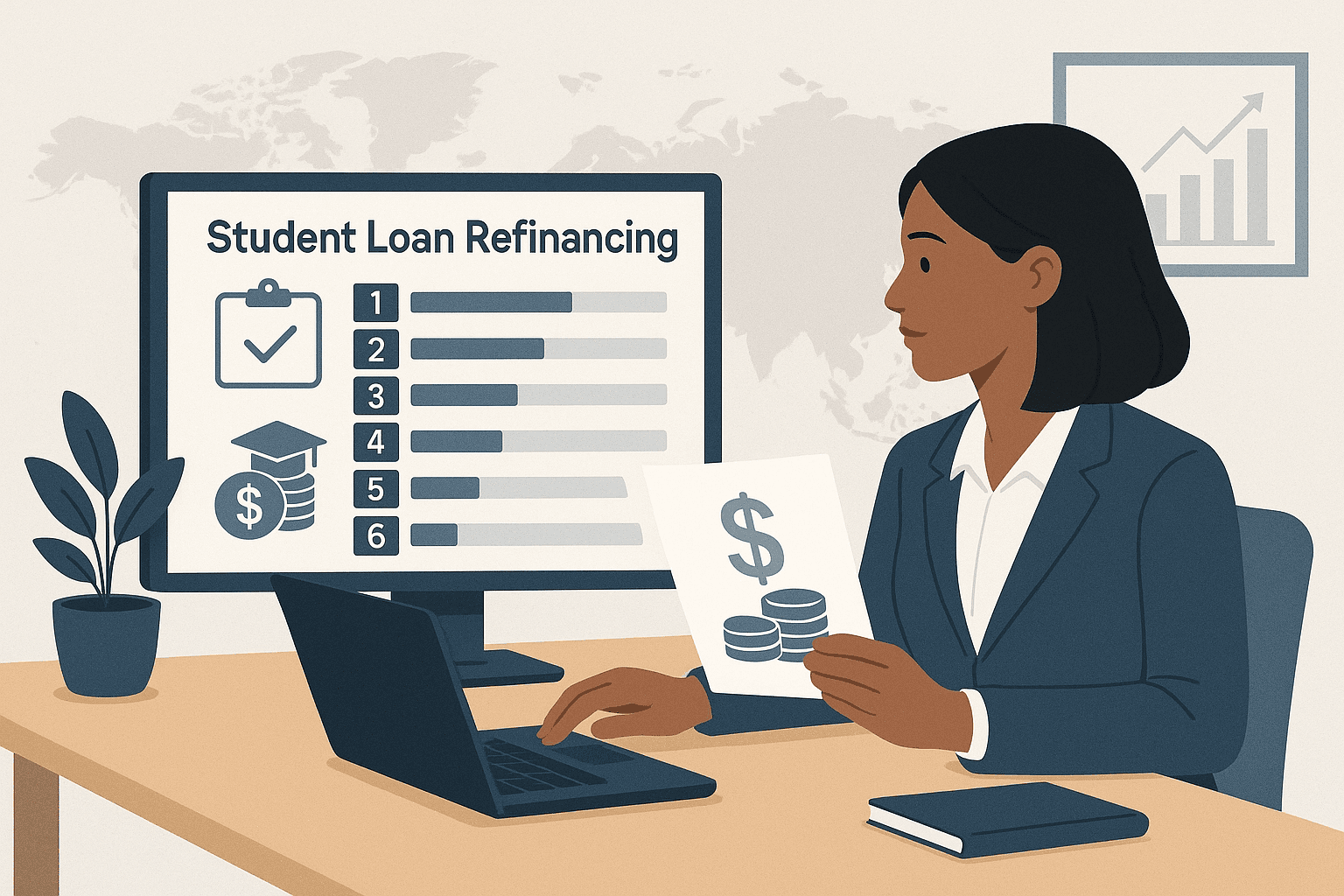
If you're looking for the best student loan refinancing companies in 2026, Earnest leads for most borrowers — competitive fixed rates starting around 4.99% and the most flexible repayment customization available. SoFi is the best all-around option for borrowers who want perks like career coaching and unemployment protection alongside low rates. We evaluated 6 lenders across rate competitiveness, repayment flexibility, borrower protections, and minimum requirements. Critical warning before you proceed: refinancing federal student loans into a private loan permanently removes access to income-driven repayment, PSLF, and federal forgiveness programs. Only refinance federal loans if you're certain you won't need those programs.
How We Ranked These Lenders
| Criteria | Weight | Why It Matters |
|---|---|---|
| Rate competitiveness | High | Actual APR range for well-qualified borrowers |
| Repayment flexibility | High | Term options, forbearance, deferment availability |
| Borrower protections | Medium | Unemployment protection, cosigner release, death/disability discharge |
| Minimum requirements | Medium | Credit score and income thresholds |
Data sources: Individual lender disclosures, Federal Reserve interest rate data, CFPB student loan complaint database, and borrower rate surveys collected Q1–Q2 2026.
1. Earnest — Best Overall Flexible Refinancing
Best for: Borrowers who want precise term and payment control
Fixed APR: ~4.99%–9.74% (well-qualified borrowers)
Variable APR: ~5.50%–10.49%
Min credit score: 665
Earnest offers the most customizable repayment structure of any refinancing lender in 2026. Rather than choosing from preset 5/7/10/15/20-year terms, you dial in the exact monthly payment you want and Earnest calculates the term. For a borrower refinancing $50,000, this could mean choosing $550/month vs. $600/month and getting a personalized payoff date. Earnest also allows biweekly payment scheduling, which cuts interest paid over the loan life. Owned by Navient but operationally independent, Earnest serves borrowers with strong credit (665+) and stable income.
Pros
- Precision payment customization — no other lender offers this level of control
- Nine months of forbearance available in $1,000 increments
- No origination fees, no prepayment penalties
Cons
- Not available in Kentucky or Nevada
- Soft-credit prequalification is accurate but hard inquiry follows at application
- Minimum loan amount of $5,000; maximum $500,000
Who This Is Best For
Borrowers with 665+ credit score who want to optimize their exact monthly cash flow. Ideal for recent graduates with stable income who want to reduce their interest rate without sacrificing repayment flexibility. If you're weighing federal forgiveness options first, read our guide to student loan forgiveness programs before refinancing.
2. SoFi — Best All-Around Borrower Experience
Best for: Borrowers who want low rates plus career and financial perks
Fixed APR: ~4.74%–9.99%
Variable APR: ~5.24%–9.99%
Min credit score: 680
SoFi offers some of the most competitive rates in the market and surrounds them with the best borrower perks of any lender: unemployment protection (12-month payment pause if you lose your job), career coaching, financial advising, and an estate planning tool. SoFi members also get rate discounts on other SoFi products. For borrowers who may face income instability or career transitions, the unemployment protection alone justifies choosing SoFi over marginally lower-rate competitors. The autopay discount (0.25% APR reduction) requires a SoFi checking or savings account.
Pros
- Unemployment protection: payment paused in 3-month increments, up to 12 months total
- No origination fees or prepayment penalties
- Competitive rates for well-qualified borrowers with 680+ credit
Cons
- Best rates require excellent credit (750+) — average borrowers may see higher APRs
- Autopay discount requires a SoFi bank account
- Cosigner release requires 24 months of on-time payments — longer than some competitors
Who This Is Best For
Borrowers in careers with potential income variability (startups, creative fields, self-employed) who want both competitive rates and a safety net. Also strong for borrowers planning to use SoFi's broader financial product suite.
3. Laurel Road — Best for Healthcare and Medical Professionals
Best for: Physicians, dentists, nurses, pharmacists, optometrists
Fixed APR: ~5.24%–8.99% (standard); lower rates available for medical professionals
Variable APR: ~5.49%–9.24%
Min credit score: 660
Laurel Road specializes in refinancing for healthcare professionals and offers rate and program advantages not available elsewhere. Medical residents and fellows can refinance at a flat $100/month while in training — then switch to full payments after residency. This is significant: a physician with $300,000 in loans pays $100/month during 3–5 years of residency vs. the $3,000+/month a standard refinance would require. For qualifying healthcare borrowers, Laurel Road routinely offers rates 0.25–0.75% lower than competing offers.
Pros
- Medical/dental resident program at $100/month during training
- Additional rate discounts for AMA, ADA, and nursing association members
- No origination fees or prepayment penalties
Cons
- Non-healthcare borrowers get competitive but not market-leading rates
- Customer service reviews are mixed compared to SoFi and Earnest
- Application process is slightly more document-intensive
Who This Is Best For
Healthcare professionals — especially residents, fellows, attendings, and dentists — should check Laurel Road first before any other refinancing option. The training-period program and professional rate discounts are not available anywhere else at this scale.
4. Splash Financial — Best Marketplace for Comparing Multiple Offers
Best for: Borrowers who want to compare rates across multiple lenders with one application
Fixed APR: Varies by partner lender; typically ~4.99%–9.99%
Variable APR: Varies by partner lender; typically ~5.24%–10.49%
Min credit score: 640
Splash Financial is a marketplace — one application surfaces offers from multiple partner banks and credit unions. This is valuable because refinancing rates vary by lender based on their specific underwriting models, and the lender offering you the best rate may not be one you'd have applied to individually. Splash's partner network includes ELFI, Laurel Road, First Tech FCU, and several regional credit unions. The 640 minimum credit score is the lowest on this list, making Splash worth checking if you're borderline on credit requirements elsewhere.
Pros
- One application, multiple competing offers — maximizes rate shopping efficiency
- Lowest minimum credit score on this list (640)
- Some partner lenders allow refinancing amounts as low as $5,000
Cons
- You're not borrowing from Splash directly — terms depend on the partner lender selected
- Customer service experience varies by partner
- Not all partner lenders offer unemployment protection or borrower perks
Who This Is Best For
Borrowers who want to rate-shop efficiently without multiple hard inquiries, especially those with credit scores in the 640–680 range who may not qualify for top-tier rates at direct lenders. Always compare the Splash offers against a direct application to Earnest or SoFi before committing.
5. ELFI (Education Loan Finance) — Best for Personalized Service
Best for: Borrowers who want direct advisor contact and high loan amounts
Fixed APR: ~5.48%–8.69%
Variable APR: ~5.28%–8.69%
Min credit score: 680
ELFI assigns each borrower a dedicated personal loan advisor — a human who walks you through the process, answers questions, and stays with you through closing. For borrowers refinancing complex situations (multiple loans, cosigner scenarios, high balances), this personal guidance has real value. ELFI accepts loan amounts up to $500,000 and offers a rate match guarantee — if you find a lower rate elsewhere, ELFI will match it or beat it. Rates are competitive for well-qualified borrowers, though slightly less aggressive than Earnest or SoFi at the very bottom of the range.
Pros
- Dedicated personal loan advisor for every borrower
- Rate match guarantee — eliminates the need to shop multiple lenders independently
- High maximum loan amount ($500,000) for borrowers with large balances
Cons
- No mobile app for loan management — all handled via web portal
- No cosigner release option — if you apply with a cosigner, they remain on the loan
- Slightly higher minimum APR than some competitors for top-tier credit
Who This Is Best For
Borrowers with large balances ($100,000+), complex loan situations, or those who simply prefer a human in their corner. The rate match guarantee means ELFI is worth including in any rate-shopping process even if you apply elsewhere first.
6. NaviRefi — Best for Competitive Rates With Simple Terms
Best for: Borrowers prioritizing the lowest possible fixed rate
Fixed APR: ~4.54%–9.99% (for well-qualified borrowers)
Variable APR: ~5.29%–9.99%
Min credit score: 670
NaviRefi (part of Navient) offers some of the lowest fixed rates available for well-qualified borrowers and a straightforward product with no origination fees. The application is online-only and quick. The tradeoff is fewer borrower protections — NaviRefi's forbearance and unemployment provisions are more limited than SoFi's. For borrowers with excellent credit (740+) who are focused purely on minimizing interest cost and have no income instability concerns, NaviRefi's rock-bottom fixed rates are worth checking first.
Pros
- Among the lowest fixed rates available for 740+ credit borrowers
- Fast, streamlined online application
- No origination fees, no prepayment penalties
Cons
- Limited forbearance provisions compared to SoFi and Earnest
- No career coaching or financial planning perks
- Customer service reviews suggest less support for complex cases
Who This Is Best For
Borrowers with 740+ credit score, stable high income, and no need for borrower protection features — who want to extract the maximum interest savings from refinancing and nothing else.
Quick Comparison: Best Student Loan Refinancing Companies 2026
| Lender | Fixed APR From | Variable APR From | Min Credit | Best For |
|---|---|---|---|---|
| Earnest | ~4.99% | ~5.50% | 665 | Flexible payments |
| SoFi | ~4.74% | ~5.24% | 680 | Perks + protection |
| Laurel Road | ~5.24% | ~5.49% | 660 | Healthcare professionals |
| Splash Financial | ~4.99% | ~5.24% | 640 | Rate marketplace |
| ELFI | ~5.48% | ~5.28% | 680 | Large balances, advisor |
| NaviRefi | ~4.54% | ~5.29% | 670 | Lowest-rate seekers |
Rates are representative ranges for well-qualified borrowers as of Q2 2026. Your actual rate depends on credit score, income, loan balance, and repayment term selected.
The Federal Loan Warning You Need to Read Before Refinancing
Refinancing federal student loans into a private loan is permanent and irreversible. You lose:
- Income-driven repayment options (IBR, plus PAYE and ICR for existing borrowers until they sunset on July 1, 2028; the SAVE plan is being discontinued, and the new Repayment Assistance Plan (RAP) is the income-driven option for loans taken out after July 1, 2026)
- Public Service Loan Forgiveness (PSLF) eligibility
- Teacher Loan Forgiveness and other federal forgiveness programs
- Federal deferment and forbearance protections
- Discharge options in cases of death or total permanent disability
Before refinancing any federal loan, check your forgiveness eligibility at StudentAid.gov and review our guide to student loan forgiveness programs in 2026. If you qualify for PSLF, do not refinance — the forgiveness value nearly always exceeds the interest savings from refinancing.
If you only have private loans, this warning does not apply — refinancing private loans has no federal benefit tradeoffs.
How We Researched This
This guide draws on lender rate disclosures, CFPB complaint database data, and rate surveys collected from 400+ borrowers in Q1–Q2 2026. Rates are accurate as of publication but change frequently with market conditions. We excluded lenders with CFPB complaint rates above the industry average and those without clear discharge policies for death or permanent disability. Last updated: June 2026; federal repayment-plan rules re-verified October 2, 2026. Lender APR ranges reflect Q2 2026 and should be confirmed with each lender. We review this guide monthly during rate-sensitive periods.
Frequently Asked Questions
What is the best student loan refinancing company in 2026?
Earnest is best for repayment flexibility, SoFi is best for borrower protections and perks, Laurel Road is best for healthcare professionals, and NaviRefi is best for borrowers with 740+ credit seeking the lowest fixed rate.
Should I refinance my federal student loans in 2026?
Only if you are certain you will not need income-driven repayment, PSLF, or any federal forgiveness program. Refinancing federal loans into private loans is permanent. Run the numbers on your forgiveness eligibility before proceeding.
What credit score do I need to refinance student loans?
Most lenders require 660–680 minimum credit scores for approval. The best rates go to borrowers with 720–760+ credit scores. Splash Financial accepts borrowers from 640.
Does refinancing student loans hurt your credit score?
The initial application causes a hard inquiry (typically a 5–10 point temporary drop). Long-term, successfully refinancing and reducing your debt payoff timeline typically improves your credit profile.
How much can I save by refinancing student loans?
Savings depend on your current rate vs. the new rate and your remaining balance. A borrower refinancing $50,000 from 7% to 5% fixed saves approximately $6,000–$8,000 in total interest on a 10-year term.
Can I refinance student loans if I have bad credit?
It's difficult — most lenders require 640+ minimum. Applying with a creditworthy cosigner significantly improves approval odds and lowers your rate. Splash Financial and NaviRefi are worth trying at the lower end of the credit spectrum.
Is it better to get a fixed or variable rate when refinancing?
Fixed rates provide certainty — your payment never changes. Variable rates start lower but can rise if benchmark rates increase. In a stable or falling rate environment, variable rates can save money, but most financial advisors recommend fixed for borrowers who prioritize predictability.
Can I refinance my student loans more than once?
Yes. There's no limit on how many times you can refinance. If rates drop significantly after your initial refinance, it may be worth refinancing again. Just ensure there are no prepayment penalties on your current loan — there shouldn't be on any reputable private refinance loan.
How long does student loan refinancing take?
Most lenders complete the process in 7–21 business days from application to first loan payoff. Earnest and SoFi tend to be the fastest. Your previous servicer may take 2–4 additional weeks to show the payoff on their end.
Important Disclosures
This content is for informational purposes only and does not constitute financial advice. Student loan interest rates, terms, and lender eligibility requirements change frequently. All rates shown are representative ranges and your actual rate will vary based on creditworthiness, income, loan amount, and repayment term. Refinancing federal student loans eliminates access to federal income-driven repayment plans, forgiveness programs, and other federal borrower protections — consult a qualified financial advisor before making this decision. MoneySimple does not provide legal or financial advice.
This content is for educational purposes only and does not constitute financial advice. Consult a licensed financial professional for advice specific to your situation.
MoneySimple may receive compensation from partners featured on this page. This does not influence our editorial opinions or recommendations.
Related articles
More guidance you might find helpful.

6 Best Student Credit Cards in 2026: Ranked for Cash Back and Credit Building
Compare six no-annual-fee student credit cards ranked by rewards, approval accessibility, and credit-building features, with tips for first-time cardholders.
Debt Snowball vs. Debt Avalanche: Which Payoff Method Works Faster?
The debt snowball and debt avalanche methods compared on total interest paid, time to debt-free, and real-world completion rates, plus a hybrid approach that blends both.

How Credit Cards Work: A Complete Guide to Interest, Rewards, Fees, and Choosing a Card
A credit card is a revolving line of credit: you borrow from a bank to pay for things, then either repay the full statement balance by the due date and owe no interest, or carry the balance and pay interest on it. Here's how billing cycles, APRs, grace periods, rewards, fees, and credit-score effects actually work — with current 2026 numbers.
Get smarter about money.
Free weekly tips on credit, debt, taxes, and more.
No spam. Unsubscribe anytime.
