7 Student Loan Forgiveness Programs in 2026: Are You Eligible?
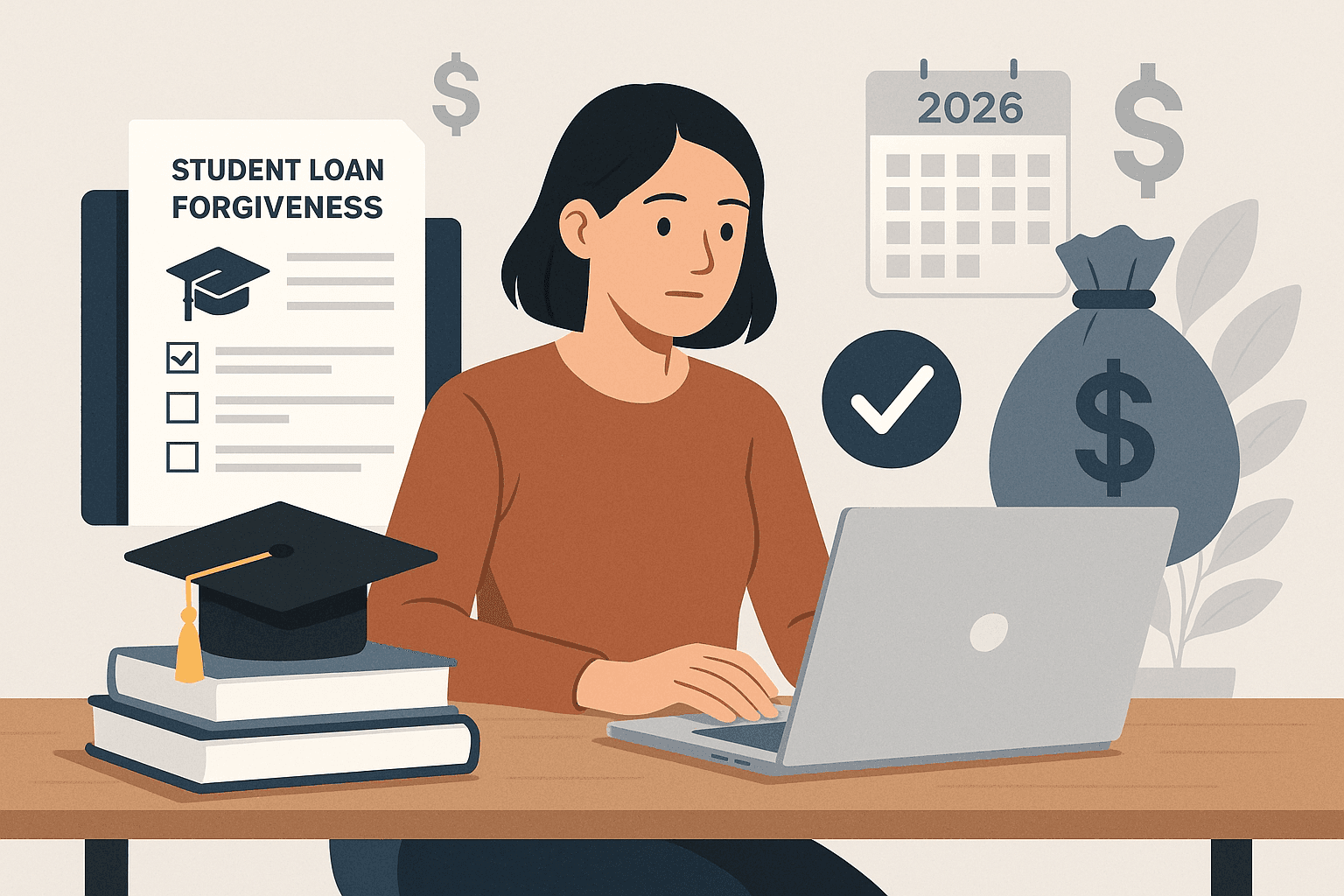
There are 7 active student loan forgiveness programs in 2026 — and most borrowers don't know which ones they qualify for. We compared all 7 by eligibility, forgiveness amount, and timeline so you can find the right program for your job, loan type, and situation.
Last updated: April 2026 | Reviewed by: MoneySimple Editorial Team
If you're carrying federal student loan debt, there are 7 active forgiveness programs that could reduce or eliminate your balance — and most borrowers don't know which ones they qualify for. Public Service Loan Forgiveness (PSLF) is the most widely available, covering government employees, teachers, nurses, and nonprofit workers. We reviewed all 7 programs based on eligibility requirements, forgiveness amounts, timelines, and application complexity. This guide tells you exactly which programs to pursue based on your job, loan type, and situation.
How We Ranked These Programs
We evaluated each program across 5 criteria:
| Criteria | Weight | Why It Matters |
|---|---|---|
| Eligibility reach | High | How many borrowers realistically qualify |
| Forgiveness amount | High | Total debt that can be discharged |
| Timeline to relief | Medium | How long until you see actual forgiveness |
| Application complexity | Medium | How hard it is to successfully apply and get approved |
| Program stability | Medium | Risk of legal or regulatory changes affecting eligibility |
Data sources: Federal Student Aid (studentaid.gov), U.S. Department of Education, HRSA, National Student Loan Data System (NSLDS), CFPB Student Loan Complaint Database.
1. Public Service Loan Forgiveness (PSLF) — Best for Government & Nonprofit Workers
Best for: Federal, state, local government employees and 501(c)(3) nonprofit workers
Forgiveness amount: Full remaining balance (no cap)
Timeline: 10 years (120 qualifying payments)
PSLF forgives 100% of your remaining Direct Loan balance after 120 qualifying monthly payments while working full-time for a qualifying employer. As of 2025, over 1 million borrowers have received PSLF forgiveness, with an average discharge of approximately $70,000. It covers any federal Direct Loan and requires enrollment in an income-driven repayment (IDR) plan to keep payments manageable during the 10-year period.
Pros
- Full balance forgiveness with no dollar cap — high earners with large balances benefit most
- Federally tax-free forgiveness (state tax treatment varies)
- Qualifying time can span multiple employers as long as each is a qualifying organization
Cons
- Only Direct Loans qualify — older FFEL and Perkins loans must be consolidated first
- Requires 10 consecutive years at a qualifying employer — career changes to the private sector can reset progress
- Submit an Employment Certification Form (ECF) annually; don't wait until payment 120 to discover a paperwork problem
Who This Is Best For
PSLF is the gold standard for borrowers with large federal loan balances working in government or at a 501(c)(3) nonprofit long-term. It's especially powerful for doctors, lawyers, social workers, or MBAs in public service with six-figure balances — the value of forgiveness grows with your balance. Avoid if you're in the private sector or plan to leave public service before reaching 120 payments.
2. Income-Driven Repayment (IDR) Forgiveness — Best for Long-Term Borrowers Who Don't Qualify for PSLF
Best for: Federal loan borrowers not in public service who need affordable monthly payments
Forgiveness amount: Full remaining balance (currently federally taxable)
Timeline: 20–25 years depending on plan
IDR plans cap your monthly payment at 5–20% of discretionary income and forgive the remaining balance after 20 or 25 years of qualifying payments. Available plans include IBR (Income-Based Repayment), PAYE (Pay As You Earn), and ICR (Income-Contingent Repayment). The SAVE plan was suspended by federal courts in 2024 and its status remains subject to ongoing litigation — verify availability at studentaid.gov before enrolling.
Tax note: Unlike PSLF, IDR forgiveness outside of public service is currently taxable as ordinary income at the federal level. If you expect a large forgiven balance, budget for the tax bill in the forgiveness year. For strategies to reduce your loan balance faster while on an IDR plan, see 9 debt payoff methods that actually work.
Pros
- Available to all federal Direct Loan borrowers regardless of employer
- Reduces monthly payments to a percentage of income — prevents default during low-income years
- Multiple plan options with different timelines (20 vs. 25 years depending on loan type and plan)
Cons
- 20–25 year commitment means you may pay significantly more in interest over time than the forgiven balance is worth
- Forgiven balance is currently federally taxable as ordinary income (unlike PSLF)
- SAVE plan legal uncertainty — IBR, PAYE, and ICR remain available alternatives
Who This Is Best For
IDR forgiveness makes most sense for borrowers with high debt relative to income who don't work in public service. If your balance is large and your income is modest, the forgiven amount after 20–25 years can be substantial. If you do work in public service, enroll in IDR and pursue PSLF simultaneously — you get reduced payments now and full tax-free forgiveness in 10 years instead of 20+.
3. Teacher Loan Forgiveness — Best for K-12 Educators at Low-Income Schools
Best for: Full-time K-12 teachers at Title I elementary or secondary schools
Forgiveness amount: Up to $17,500
Timeline: 5 consecutive years of qualifying teaching service
Teacher Loan Forgiveness provides up to $17,500 in forgiveness for math, science, and special education teachers and up to $5,000 for other eligible subjects, after 5 consecutive years teaching full-time at a low-income (Title I) school. It applies to Direct Subsidized and Unsubsidized Loans and FFEL program loans. Teachers can combine this program with PSLF — but the same 5 years of service cannot count toward both simultaneously.
Pros
- Faster than PSLF (5 years vs. 10) if your balance is modest
- Available for FFEL loans, not just Direct Loans — broader eligibility than PSLF
- Can be strategically sequenced with PSLF: claim Teacher Loan Forgiveness first, then continue toward 120 PSLF payments
Cons
- $17,500 hard cap — won't make a meaningful dent in balances above $50,000
- Must teach at a qualifying Title I school — verify using the Federal Student Aid School Database before counting those years
- The 5 years of service cannot simultaneously count toward the 120 PSLF payment requirement
Who This Is Best For
Teachers with smaller loan balances (under $30,000) who teach math, science, or special education at qualifying low-income schools. If your balance exceeds $30,000, the $17,500 cap makes PSLF a better primary strategy. Consider Teacher Loan Forgiveness as a first step to knock down your principal, then continue toward full PSLF forgiveness.
4. Nurse Corps Loan Repayment Program — Best for Nurses in Underserved Communities
Best for: Registered nurses, advanced practice RNs, and nurse faculty
Forgiveness amount: Up to 85% of unpaid nursing education loan balance
Timeline: 2-year commitment (with optional 3rd year for additional 25%)
The HRSA Nurse Corps Loan Repayment Program pays 60% of your unpaid nursing education loan balance in exchange for 2 years of full-time service at a Critical Shortage Facility (CSF). A third year of service earns an additional 25%, bringing the maximum total to 85%. Crucially, this program covers both federal and private nursing education loans — a rare exception in the forgiveness landscape. Awards are competitive and not guaranteed to all qualified applicants.
Pros
- Up to 85% debt reduction in just 3 years — far faster than IDR or PSLF for comparable relief
- Covers both federal AND private nursing education loans (most forgiveness programs exclude private loans)
- Tax assistance is provided alongside the award
Cons
- Highly competitive — not all qualified applicants receive awards in a given cycle
- Must work at a HRSA-designated Critical Shortage Facility in a rural or underserved area
- Application window opens annually — missing the cycle means waiting a full year to reapply
Who This Is Best For
Registered nurses or nurse practitioners willing to commit to underserved communities, rural hospitals, or federally qualified health centers. If you graduated with significant nursing school debt — including private loans — and can work at a qualifying facility, this program delivers faster relief than almost any other option. Use the HRSA CSF locator tool to check if your current or prospective employer qualifies before applying.
5. Total and Permanent Disability (TPD) Discharge — Best for Borrowers with Qualifying Disabilities
Best for: Borrowers with a documented total and permanent disability
Forgiveness amount: 100% of federal student loan balance
Timeline: Immediate upon approval (plus 3-year post-discharge monitoring period)
TPD Discharge eliminates 100% of your federal student loan balance if you are totally and permanently disabled. Eligibility is established through a Social Security Administration (SSA) disability determination, a VA service-connected disability rating, or a physician's certification. Since 2021, the Department of Education has proactively matched eligible SSA recipients for automatic discharge — many borrowers receive relief without filing an application.
Pros
- Full 100% discharge with no dollar cap
- Federally tax-free (as of 2025)
- SSA- and VA-matched borrowers can receive automatic discharge without an application
Cons
- Strict disability criteria — must be unable to engage in substantial gainful activity
- 3-year post-discharge monitoring period; earnings above the threshold can trigger reinstatement of the debt
- Private student loans are not covered by this program
Who This Is Best For
Any federal student loan borrower who receives SSDI or has a 100% VA disability rating should check their eligibility immediately. The automatic discharge pathway means many eligible borrowers have already received forgiveness. Check your loan servicer and your account at studentaid.gov to see if a TPD discharge has been initiated on your account.
6. Borrower Defense to Repayment — Best for For-Profit School Fraud Victims
Best for: Borrowers who were misled or defrauded by their school
Forgiveness amount: Full or partial discharge depending on ruling
Timeline: Months to several years (varies significantly)
Borrower Defense allows federal student loan borrowers to seek full or partial discharge if their school engaged in misconduct — including misrepresentation about job placement rates, accreditation, program quality, or transfer credit policies. This program has primarily benefited borrowers from collapsed for-profit institutions including ITT Technical Institute, Corinthian Colleges, and DeVry University. Approval rates and processing timelines vary significantly by administration.
Pros
- Can discharge 100% of loans tied to the fraudulent institution
- No financial qualification required — approval is based on school conduct, not borrower income
- Group discharges have been granted for students at specific schools, sometimes automatically
Cons
- Processing times are unpredictable and can take years
- Approval is not guaranteed — evidentiary standards and approval rates shift between federal administrations
- Only covers Direct Loans taken to attend the qualifying institution
Who This Is Best For
Borrowers who attended a for-profit school that misrepresented its programs, job placement rates, or accreditation status — especially schools that closed or faced federal sanctions. Check the Department of Education's Borrower Defense portal to see if your school has an open group discharge claim, which can significantly accelerate the process.
7. Closed School Discharge — Best for Students Whose School Shut Down
Best for: Students enrolled when their school closed (or within 180 days before closure)
Forgiveness amount: 100% of loans for attendance at that school
Timeline: Automatic for most eligible borrowers under 2023 regulatory changes
Closed School Discharge eliminates federal student loan debt for borrowers who were enrolled when their school closed — or withdrew within 180 days before closure — and were unable to complete their program. Under 2023 Department of Education rule changes, most eligible borrowers now receive automatic discharge without needing to apply, ending a loophole where schools could avoid triggering discharges through teach-out agreements.
Pros
- Automatic discharge for most eligible borrowers since 2023 — no application required
- Full 100% discharge of all loans taken for attendance at the closed school
- Federally tax-free
Cons
- Only covers loans for the institution that closed — does not apply to loans for other schools attended
- If you completed a comparable program via teach-out or transfer, you may not qualify
- Private student loans are excluded
Who This Is Best For
Any borrower who attended a school that later closed without completing their degree. Former students of ITT Tech, Corinthian Colleges, Art Institute campuses, and dozens of other closed institutions may qualify for automatic discharge. Verify your school's status and check for pending automatic discharge at studentaid.gov's Closed School Discharge information page.
Quick Comparison
| Program | Max Forgiveness | Timeline | Covers Private Loans? | Best For |
|---|---|---|---|---|
| PSLF | 100% (no cap) | 10 years | No | Govt/nonprofit workers |
| IDR Forgiveness | 100% (taxable) | 20–25 years | No | Non-PSLF borrowers |
| Teacher Loan Forgiveness | Up to $17,500 | 5 years | No | K-12 Title I teachers |
| Nurse Corps Repayment | Up to 85% | 2–3 years | Yes (nursing loans) | Nurses at CSFs |
| TPD Discharge | 100% | Immediate | No | Disabled borrowers |
| Borrower Defense | Full or partial | Varies | No | For-profit fraud victims |
| Closed School Discharge | 100% | Automatic | No | Students at closed schools |
How We Researched This
This guide draws on Federal Student Aid program documentation at studentaid.gov, HRSA Nurse Corps program statistics, the U.S. Department of Education's Office of Federal Student Aid annual reports, and CFPB student loan complaint data. We analyzed eligibility requirements as published by the federal government and cross-referenced with NSLDS documentation. We excluded state-specific loan forgiveness programs that vary significantly by residency. The SAVE plan is noted as suspended pending litigation; IBR, PAYE, and ICR remain available plan alternatives.
Last updated: April 2026. We review this guide quarterly or when major regulatory changes occur.
Authored by the MoneySimple Editorial Team — financial education writers specializing in federal student loan policy, consumer debt, and personal finance.
Frequently Asked Questions
What is the fastest student loan forgiveness program?
It depends on your situation. For nurses, the Nurse Corps program can eliminate up to 85% of qualifying loans in 3 years. For borrowers with disabilities, TPD Discharge can be automatic. For students at closed schools, discharge is also often automatic under 2023 rules. PSLF at 10 years is the fastest path to full, tax-free forgiveness with no dollar cap for public service workers.
Can I qualify for more than one student loan forgiveness program?
Yes, in some cases. Teachers can sequence Teacher Loan Forgiveness (5 years) with PSLF (10 years), though the same years of service cannot count toward both simultaneously. Nurses can combine Nurse Corps repayment with continued IDR enrollment. You cannot apply the same loan payments toward multiple forgiveness programs at the same time.
Do I have to pay taxes on forgiven student loans?
It depends on the program. PSLF forgiveness is federally tax-free. TPD Discharge, Closed School Discharge, and Borrower Defense forgiveness are all federally tax-free. IDR forgiveness outside of PSLF is currently taxable as ordinary income at the federal level. State tax treatment varies. For other education-related tax breaks, see our guide to tax deductions you shouldn't miss in 2026.
What loans qualify for federal student loan forgiveness?
Most programs cover federal Direct Loans. FFEL loans can be consolidated into Direct Loans to qualify for PSLF and IDR forgiveness. Teacher Loan Forgiveness covers Direct Loans and FFEL loans directly. TPD Discharge and Closed School Discharge cover Direct, FFEL, and Perkins loans. Private student loans generally do not qualify — the Nurse Corps program is a notable exception for nursing-specific private loans.
Is the SAVE plan still available in 2026?
The SAVE plan was suspended by federal courts in 2024 and its status remains subject to ongoing legal proceedings. Verify current availability directly at studentaid.gov before enrolling. IBR, PAYE, and ICR remain active income-driven repayment plan alternatives.
How do I know if my employer qualifies for PSLF?
Use the free PSLF Help Tool at studentaid.gov/pslf to check employer eligibility. Qualifying employers include federal, state, local, and tribal government entities and U.S. 501(c)(3) nonprofit organizations. Submit an Employment Certification Form (ECF) annually — don't wait until you're near 120 payments to discover a gap.
Can Parent PLUS loans qualify for forgiveness?
Parent PLUS loans have limited options. They qualify for ICR after consolidation, leading to IDR forgiveness after 25 years. They also qualify for PSLF if the parent borrower works for a qualifying employer. Teacher Loan Forgiveness, Nurse Corps, and most other program-specific forgiveness programs do not apply to Parent PLUS loans.
What if I don't qualify for any forgiveness program?
If forgiveness isn't available for your situation, income-driven repayment can still lower your monthly payments to an affordable level. Private refinancing is another option for lowering your interest rate — though you'd permanently lose access to federal protections and any forgiveness programs. For strategies to pay down your balance faster, see 9 debt payoff methods that actually work.
How do I apply for student loan forgiveness?
Most applications are submitted through studentaid.gov using your FSA ID. PSLF uses a dedicated Help Tool and requires annual Employment Certification Forms. Nurse Corps applications go through HRSA's application portal. TPD Discharge applications go through the program servicer at disabilitydischarge.com. Borrower Defense applications are submitted at studentaid.gov/borrower-defense.
Will student loan forgiveness programs still exist long-term?
Programs established by statute — including PSLF, TPD Discharge, Closed School Discharge, and Teacher Loan Forgiveness — require congressional action to eliminate. IDR plan rules and program-specific terms are more subject to regulatory change through the Department of Education. Monitor studentaid.gov for official updates.
Important Disclosures
This content is for informational purposes only and does not constitute financial, legal, or tax advice. Student loan forgiveness program eligibility, terms, and availability change frequently and may vary based on loan type, repayment history, employer, and federal regulations in effect at the time of application. Verify all program requirements and current status at studentaid.gov before making decisions. Some links on this page may be affiliate links; this does not influence our editorial rankings — our methodology is described above. Results vary. Consult a certified student loan counselor or licensed financial advisor for guidance specific to your situation.
Personal & Student Loan Library
- 7 Best Personal Loans for Bad Credit in 2026
- 7 Best Student Loan Refinancing Lenders in 2026: Ranked by Rates, Terms, and Approval Odds
- Best Personal Loans for Debt Consolidation in 2026: 7 Lenders Compared
- Best Private Student Loan Lenders of 2026: Top 7 Compared
- Best Student Loan Refinancing Companies of 2026: 6 Lenders Ranked
This content is for educational purposes only and does not constitute financial advice. Consult a licensed financial professional for advice specific to your situation.
MoneySimple may receive compensation from partners featured on this page. This does not influence our editorial opinions or recommendations.
Related articles
More guidance you might find helpful.

6 Best Student Credit Cards in 2026: Ranked for Cash Back and Credit Building
Compare six no-annual-fee student credit cards ranked by rewards, approval accessibility, and credit-building features, with tips for first-time cardholders.
Debt Snowball vs. Debt Avalanche: Which Payoff Method Works Faster?
The debt snowball and debt avalanche methods compared on total interest paid, time to debt-free, and real-world completion rates, plus a hybrid approach that blends both.

How Credit Cards Work: A Complete Guide to Interest, Rewards, Fees, and Choosing a Card
A credit card is a revolving line of credit: you borrow from a bank to pay for things, then either repay the full statement balance by the due date and owe no interest, or carry the balance and pay interest on it. Here's how billing cycles, APRs, grace periods, rewards, fees, and credit-score effects actually work — with current 2026 numbers.
Get smarter about money.
Free weekly tips on credit, debt, taxes, and more.
No spam. Unsubscribe anytime.
