7 First-Time Home Buyer Down Payment Assistance Programs You May Qualify For in 2026
Down payment assistance programs gave over $20 billion to homebuyers in 2025. The best programs for most first-time buyers are state HFA grants (3-5% of purchase price, often forgivable), USDA loans (0% down in eligible areas), and VA loans (0% down for veterans). Full guide to 7 programs and who qualifies.
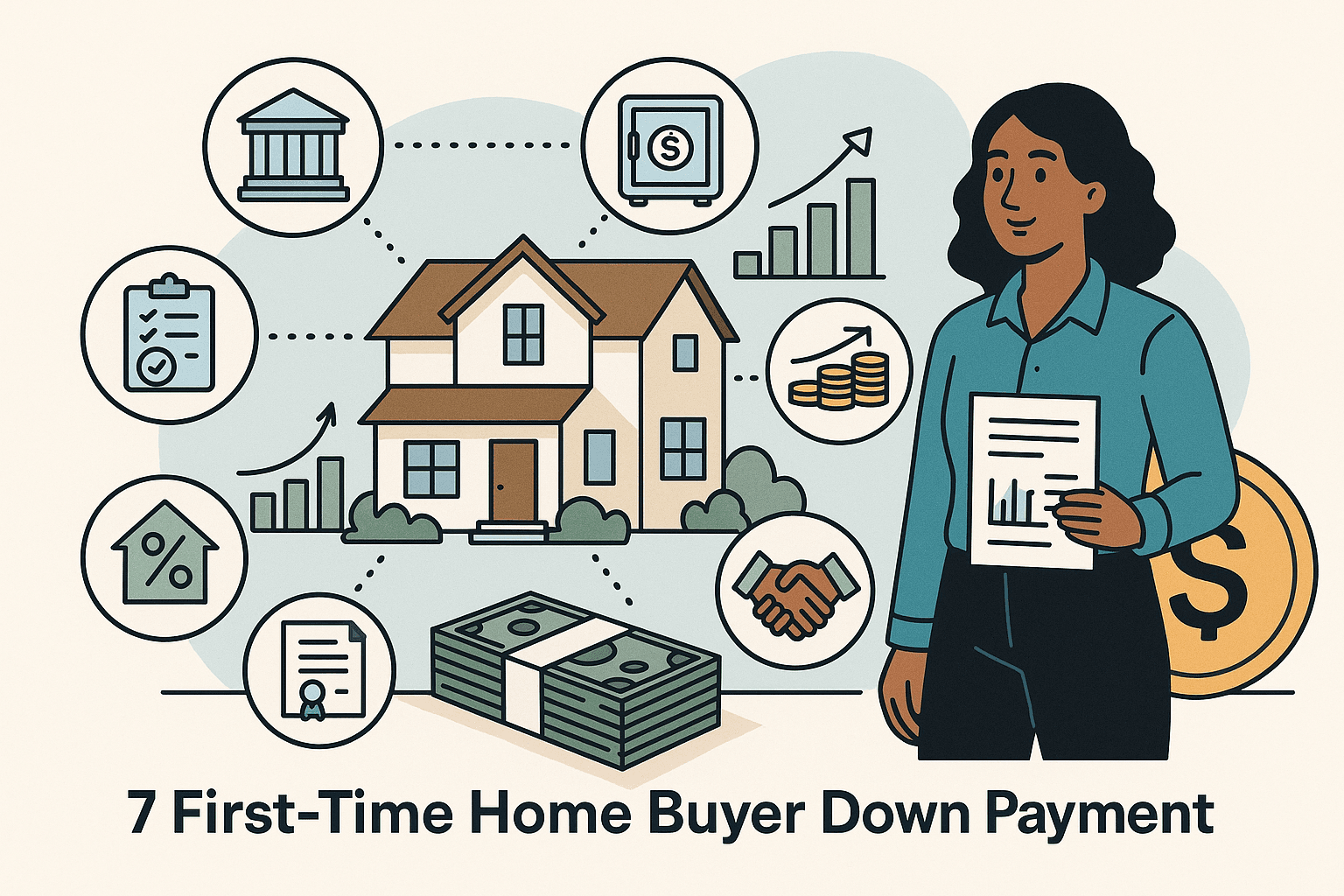
If you're struggling to save for a down payment, you may already qualify for help — down payment assistance programs distributed over $20 billion to homebuyers in 2025, according to the Down Payment Resource database. The best programs for most buyers are state Housing Finance Agency grants (often 3-5% of purchase price, no repayment required) and FHA loans paired with secondary financing. We reviewed 7 major program types available nationwide in 2026, including who qualifies and how much you can get.
How We Evaluated These Programs
We evaluated each program type across 4 criteria:
| Criteria | Weight | Why It Matters |
|---|---|---|
| Grant Amount / Assistance Available | High | Direct impact on how much cash you need to close |
| Income & Credit Eligibility | High | Determines how many buyers actually qualify |
| Repayment Requirements | Medium | Grants vs. second mortgages affect long-term cost |
| Geographic Availability | Medium | Some programs are national; others are state-specific |
Data sources: HUD.gov, Down Payment Resource (DPR) database, Fannie Mae, USDA, VA loan documentation, CFPB homebuying resources (verified May 2026).
1. State Housing Finance Agency (HFA) Programs — Best for Most First-Time Buyers
Best for: First-time buyers with moderate income in any US state
Assistance Amount: 3-5% of purchase price (varies by state)
Repayment: Often forgivable (no repayment if you stay in the home 3-5 years)
Every US state has a Housing Finance Agency (HFA) that administers down payment assistance programs for first-time buyers. Most offer a 3-5% grant or forgivable second mortgage paired with a 30-year fixed rate first mortgage. Programs like CalHFA (California), IHDA (Illinois), SONYMA (New York), TDHCA (Texas), and MHDC (Missouri) provide $10,000-$25,000 in assistance depending on purchase price and income limits. Income limits typically range from 80-120% of Area Median Income (AMI).
Pros
- Available in all 50 states — the most widely accessible program type
- Assistance is often a grant (forgiven if you stay 3-5 years) — no repayment
- First mortgage rates are often below-market through HFA bond programs
Cons
- Must use an HFA-approved lender — limits lender shopping
- Income limits exclude higher earners in expensive markets
- Home price limits apply — often capped at $400,000-$600,000
Who This Is Best For
State HFA programs are the starting point for virtually every first-time buyer. Check your state HFA website or use HUD's housing counselor search to find local programs. If you earn under $100,000 and are buying your first home, start here before looking anywhere else.
2. FHA Loans — Best for Low Credit Scores (580+)
Best for: Buyers with credit scores 580-679 who have limited down payment savings
Assistance Amount: Down payment as low as 3.5% (can be entirely from gift funds or grants)
Repayment: No second mortgage — the FHA insures the primary loan
FHA loans backed by the Federal Housing Administration allow down payments as low as 3.5% with a 580 credit score, and 10% with a 500-579 score. Critically, the entire 3.5% down payment can come from gift funds from a family member or a down payment assistance program — meaning eligible buyers can reach 0% out-of-pocket when stacked with a state grant. FHA loans are widely available through most banks and mortgage companies.
Pros
- Lowest credit score threshold of any mainstream mortgage program (580)
- Down payment can be 100% gift funds or grants
- Available through virtually any lender
Cons
- Requires mortgage insurance premium (MIP) — 1.75% upfront + 0.55%/year ongoing
- MIP cannot be cancelled unless you refinance to a conventional loan
- Loan limits apply: $524,225 for single-family in most counties (2026)
Who This Is Best For
FHA loans are ideal for buyers with credit scores between 580-679 or limited savings who can pair the program with a state HFA grant. Buyers with scores above 700 and at least 5% down may find conventional loans with PMI are cheaper long-term.
3. USDA Loans — Best for Rural and Suburban Buyers (0% Down)
Best for: Buyers purchasing in eligible rural or suburban areas
Assistance Amount: 0% down payment — no down payment required
Repayment: No down payment assistance component; this is the primary loan
USDA Rural Development loans are 100% financing (zero down) for homes in USDA-designated eligible areas — which cover roughly 97% of US land mass and 35% of the US population, including many suburban communities outside major metros. Income limits apply: generally 115% of local AMI. Credit score requirements start at 640 for most lenders. Upfront guarantee fee is 1% of loan amount; annual fee is 0.35% — lower than FHA mortgage insurance.
Pros
- Zero down payment required — the only mainstream zero-down option outside VA loans
- Lower ongoing mortgage insurance than FHA
- Geographic eligibility broader than most buyers expect
Cons
- Property must be in a USDA-eligible area (check eligibility map at usda.gov)
- Income limits are strict — high earners in eligible areas may not qualify
- Cannot be used for investment properties or second homes
Who This Is Best For
USDA loans are the strongest option for buyers outside major metro areas who want zero down payment. Use the official USDA eligibility map to check if your target area qualifies before applying. Many suburban neighborhoods within 30-50 miles of a major city are eligible.
4. VA Loans — Best for Veterans and Active Military (0% Down)
Best for: Active duty service members, veterans, and eligible surviving spouses
Assistance Amount: 0% down payment on the primary loan
Repayment: No down payment component — VA guarantees the primary mortgage
VA loans backed by the Department of Veterans Affairs require no down payment and no private mortgage insurance — making them the strongest zero-down program available. There is a VA Funding Fee (1.25-3.3% of loan amount, depending on usage and down payment), but this can be financed into the loan. Rates on VA loans are consistently 0.25-0.50% below conventional rates, according to ICE Mortgage Technology data. Surviving spouses of service members killed in the line of duty may also qualify.
Pros
- Zero down payment with no PMI — the best mortgage program available for eligible buyers
- Below-market interest rates
- No minimum credit score from VA (lenders typically require 580-620)
Cons
- Eligibility limited to veterans, active duty, and qualifying surviving spouses
- VA Funding Fee adds to upfront costs (can be financed)
- Property must meet VA Minimum Property Requirements (MPR)
Who This Is Best For
If you or your spouse served in the military, start with a VA loan before considering any other program. The combination of zero down, no PMI, and below-market rates is unmatched. Contact a VA-approved lender first — many specialize in helping veterans navigate the entitlement and eligibility process.
5. Fannie Mae HomeReady — Best for Moderate-Income Conventional Buyers
Best for: Buyers at 80% AMI or below who want a conventional (non-FHA) loan
Assistance Amount: Down payment as low as 3%; allows grants and gifts
Repayment: No down payment assistance — this is the primary loan structure
HomeReady is Fannie Mae's low-down-payment conventional mortgage program for buyers at or below 80% AMI. The 3% minimum down payment can come from grants, gift funds, or savings. Private mortgage insurance (PMI) on HomeReady is reduced versus standard conventional PMI, and cancels automatically at 80% LTV. Buyers can also count rental income from a boarder toward qualifying income.
Pros
- Lower PMI than standard conventional loans
- PMI is cancellable (unlike FHA MIP)
- Boarder income can count toward qualification
Cons
- Income limits (80% AMI) — varies significantly by county
- Requires homebuyer education course completion
- Stricter DTI limits than FHA in some cases
Who This Is Best For
HomeReady works best for moderate-income buyers who want a conventional loan (not FHA) and plan to eventually cancel PMI. Strong for multi-generational households or buyers with rental room income that can count toward qualification.
6. Freddie Mac Home Possible — Best Conventional Alternative to HomeReady
Best for: Low-to-moderate income buyers who don't qualify for HomeReady
Assistance Amount: Down payment as low as 3%; grants and gifts allowed
Repayment: No down payment assistance — primary loan structure
Home Possible is Freddie Mac's equivalent to Fannie Mae HomeReady, with slight variations in eligibility guidelines. Income limits are also 80% AMI, but Home Possible has more flexibility for part-time and seasonal income. Minimum credit score of 660. Like HomeReady, PMI is reduced and cancellable.
Pros
- More flexible income counting (part-time, seasonal, gig income)
- 3% minimum down payment
- PMI is cancellable
Cons
- Income limits same as HomeReady (80% AMI)
- Higher minimum credit score (660) than FHA
- Requires homebuyer education course
Who This Is Best For
Home Possible is the right choice for buyers who don't qualify for HomeReady due to income type (part-time, self-employed, seasonal work) or lender preference. Ask your lender to run both scenarios — the better pricing depends on your specific credit profile.
7. Employer-Assisted Housing Programs — Most Overlooked Source of Down Payment Help
Best for: Teachers, healthcare workers, first responders, and employees of large employers
Assistance Amount: $2,500–$25,000+ depending on employer and program
Repayment: Varies — some are grants, some are forgivable loans
Many employers, nonprofits, and local governments offer down payment assistance tied to profession or employment. Teacher Next Door grants up to $8,000 to K-12 educators in any US state. First responder programs (police, fire, EMS) offer similar amounts. Large employers including hospitals, universities, and Fortune 500 companies increasingly offer homebuyer assistance as a recruiting benefit. Most buyers never check if their employer offers this.
Pros
- Not income-restricted in many cases — tied to employment, not earnings
- Can be stacked with state HFA and FHA programs for maximum benefit
- Teacher and first responder programs are widely available and underutilized
Cons
- May require staying in the job or home for a set period
- Program availability depends entirely on your employer or profession
- Less standardized than HFA or FHA programs
Who This Is Best For
Every teacher, nurse, police officer, firefighter, and EMT should check Teacher Next Door and their state's professional homebuyer programs before applying for a mortgage. Large employer benefits packages often include homebuyer assistance that goes unclaimed — ask your HR department directly.
Quick Comparison
| Program | Down Payment Required | Credit Score Min | Income Limits | Repayment |
|---|---|---|---|---|
| State HFA Grants | 0% (grant covers it) | 620-640 | 80-120% AMI | Often forgiven |
| FHA Loan | 3.5% (can be gifted) | 580 | None | No (primary loan) |
| USDA Loan | 0% | 640 | 115% AMI | No (primary loan) |
| VA Loan | 0% | 580-620 | None | No (primary loan) |
| Fannie HomeReady | 3% (can be gifted) | 620 | 80% AMI | No (primary loan) |
| Freddie Home Possible | 3% (can be gifted) | 660 | 80% AMI | No (primary loan) |
| Employer Programs | Varies | Varies | None (profession-based) | Varies |
How We Researched This
This guide draws on HUD.gov program documentation, the Down Payment Resource (DPR) database of 2,400+ assistance programs, Fannie Mae and Freddie Mac seller guide requirements, USDA and VA loan guidelines, and CFPB homebuying resources (all verified May 2026). We did not include programs with less than 3 years of documented operation or those limited to a single county without broad applicability. We review this guide quarterly as program funding and income limits are updated annually.
Frequently Asked Questions
How do I find down payment assistance programs in my area?
Use the HUD-approved housing counselor search at hud.gov or the Down Payment Resource tool at downpaymentresource.com. Both are free and show all programs available in your zip code. Your state HFA website is also a direct resource.
Can I stack multiple down payment assistance programs?
Yes — many buyers combine programs. A common stack: FHA loan + state HFA grant (covers the 3.5% down) + employer assistance (covers closing costs). Ask any HFA-approved lender about stacking eligibility before applying.
What credit score do I need for down payment assistance?
Most state HFA programs require a minimum 620-640 credit score. FHA loans go as low as 580 (with 3.5% down) or 500 (with 10% down). VA and USDA programs have no VA-set minimum, but lenders typically require 580-640.
Do down payment assistance programs affect the interest rate?
State HFA programs often provide below-market interest rates on the first mortgage — the assistance is a feature, not a cost. FHA, USDA, and VA programs do not increase your rate. Beware of any DPA program that significantly raises your first mortgage rate to fund the assistance.
What is a forgivable loan in down payment assistance?
A forgivable loan is a second mortgage that is cancelled (forgiven) after you stay in the home for a required period — typically 3, 5, or 10 years. If you sell or refinance before that period ends, you typically repay a prorated portion. After the forgiveness period, the debt disappears entirely with no repayment.
Is the first-time buyer requirement strict?
Most programs define "first-time buyer" as not having owned a primary residence in the past 3 years — not someone who has never owned a home. If you owned a home over 3 years ago and have been renting since, you likely qualify as a first-time buyer for program purposes.
How long does down payment assistance take to process?
State HFA program loans typically add 1-2 weeks to the standard mortgage timeline due to additional documentation requirements. VA and USDA loans add 1-3 weeks on average. Budget 45-60 days for closing when using assistance programs versus 30 days for a standard conventional loan.
Are there down payment assistance programs for repeat buyers?
Yes. Some state HFA programs, Fannie Mae HomeReady, and Freddie Mac Home Possible have income-based eligibility that does not require first-time buyer status in all markets. The HUD counselor search will show you programs you qualify for regardless of prior homeownership.
Important Disclosures
This content is for informational purposes only and does not constitute financial or legal advice. Program availability, income limits, and funding change frequently. Always verify current program details directly with your state HFA or a HUD-approved housing counselor before making any decisions. Consult a licensed mortgage professional for advice specific to your situation. Last updated: May 2026. We review this guide quarterly.
This content is for educational purposes only and does not constitute financial advice. Consult a licensed financial professional for advice specific to your situation.
MoneySimple may receive compensation from partners featured on this page. This does not influence our editorial opinions or recommendations.
Related articles
More guidance you might find helpful.

Best Nonprofit Credit Counseling Agencies 2026: 7 Compared
Compare 7 nonprofit credit counseling agencies for 2026 on fees, accreditation and services, plus how debt management plans work.
Debt Consolidation Loan vs Balance Transfer: Which Saves More Money in 2026
A balance transfer usually saves more if you can pay off the debt in 18–21 months. A consolidation loan wins for larger balances. Here is how the options compare on cost, speed, and risk.

Best Gas and Grocery Rewards Credit Cards 2026: 6 Cards Compared
Compare six gas and grocery rewards credit cards on earn rates, caps, fees, and real yearly rewards. See which card earns the most for a typical household in 2026.
Get smarter about money.
Free weekly tips on credit, debt, taxes, and more.
No spam. Unsubscribe anytime.
