How Does Debt Settlement Affect Your Credit Score? 7 Impacts Ranked
Debt settlement almost always lowers your credit score. We rank the seven biggest credit impacts by severity and explain alternatives to consider first.
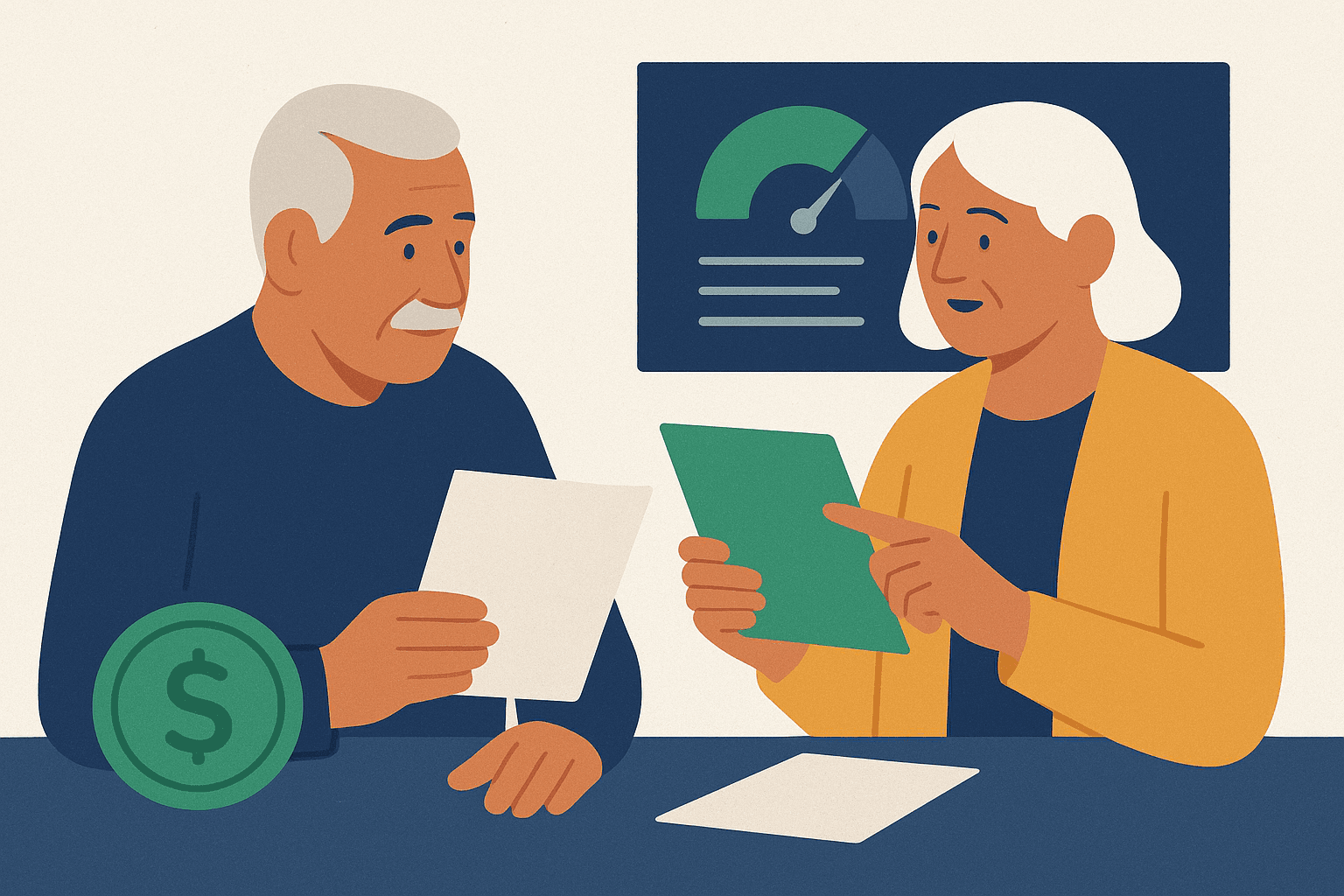
Debt settlement almost always lowers your credit score (learn more about 7 hidden ways your credit score is costing you $100k over a lifetime) (learn more about best banks for savings in 2026: features & rates compared) (learn more about 8 best auto insurance companies in 2026 (ranked by cost, coverage & claims)) (learn more about 7 best balance transfer credit cards in 2026 (0% apr up to 21 months)) (learn more about best online banks of 2026: top 7 for no fees and higher savings rates), usually by a lot at first. The biggest damage comes from missed payments before you settle (learn more about 10 tax deductions you shouldn't miss in 2026 (including 4 brand-new ones)), not from the settlement itself. Settled accounts are reported as "settled for less than the full balance," and negative marks can stay on your reports for up to seven years. We ranked the seven credit impacts by how much they typically hurt, so you can weigh settlement against alternatives.
Last updated: October 2026. We review this guide twice a year.
How We Ranked These Impacts
| Criteria | Weight | Why It Matters |
|---|---|---|
| Weight in scoring models | High | Payment history is the largest FICO factor, at roughly 35% |
| Duration on your report | High | Most negative items last up to 7 years |
| Likelihood it happens | Medium | Some impacts occur in nearly every settlement |
| Recoverability | Medium | How quickly a score can rebuild |
Data sources: FICO scoring factor disclosures, Consumer Financial Protection Bureau (CFPB), Federal Trade Commission (FTC), Fair Credit Reporting Act (FCRA) timelines, and IRS guidance on canceled debt.
1. Missed Payments Before Settlement — Biggest Score Hit
Severity: Highest
Typical timing: Months 1-6 of a program
Many settlement companies tell clients to stop paying creditors and save money in an account instead. Each missed payment can be reported as 30, 60, 90, and 120+ days late. Because payment history carries the most weight in FICO scoring, this is where most of the drop happens, and borrowers with higher starting scores often lose more points.
Pros
- Stopping payments is what gives creditors an incentive to negotiate
Cons
- Late fees, interest, and collection calls pile up
- Creditors can sue before you settle
Who This Is Best For
Only borrowers already behind who cannot keep minimums. If you are current and can pay, avoid this path.
2. The "Settled for Less Than Full Balance" Notation
Severity: High
When a creditor accepts less than owed, the account is typically marked settled, not "paid as agreed." Lenders reading your report see that you did not repay in full. The notation can influence manual underwriting, such as mortgage reviews, even after the score recovers.
Pros
- The account is closed with a zero balance, which is better than an open charge-off
Cons
- The notation can stay for up to seven years
Who This Is Best For
Borrowers who accept a short-term credit hit to resolve debt they cannot repay.
3. Charge-Offs and Collection Accounts
Severity: High
If accounts go 120-180 days past due, creditors usually charge them off and may sell them to collectors. A single account can show up as both a charge-off and a collection. Under the FCRA, the seven-year clock generally starts at the first delinquency that led to the charge-off.
Pros
- Settling stops further reporting of new late marks on that account
Cons
- Multiple tradelines may display the same debt
Who This Is Best For
Borrowers whose debts are already in collections. Settling a collection may not raise your score much, but it ends the debt.
4. Closed Accounts and Lost Credit Limit
Severity: Medium-High
Settled credit cards are typically closed. Losing available credit raises your overall credit utilization, the second-biggest factor, and can shorten the average age of open accounts over time.
Pros
- Zero balances help utilization on closed accounts that stop reporting balances
Cons
- Fewer open accounts and less available credit
Who This Is Best For
Borrowers who plan to rely less on revolving credit.
5. Credit Mix and New Credit Pressure
Severity: Medium
Fewer active cards and installment loans can reduce credit mix. You may be denied new credit for a period, which limits your ability to rebuild quickly.
Pros
- Secured cards and credit-builder loans can restart positive history
Cons
- Rebuilding takes consistent on-time payments for 12-24 months or longer
Who This Is Best For
Borrowers ready to start rebuilding right after settlement.
6. Lawsuits and Judgments
Severity: Medium, but severe if it happens
Unpaid creditors can sue. Modern credit reports generally no longer include civil judgments from the three major bureaus, but a judgment can still lead to wage garnishment or bank levies in many states.
Pros
- Settlement before judgment avoids garnishment
Cons
- Savings accumulated for settlement can be targeted by a judgment creditor
Who This Is Best For
Anyone already served with a lawsuit should speak with a consumer attorney before settling.
7. Tax Reporting on Forgiven Debt
Severity: Low for credit, significant for your wallet
Creditors may issue a Form 1099-C for canceled debt of $600 or more, and the forgiven amount can count as taxable income unless an exclusion such as insolvency applies. This does not directly change your score, but it can create a bill you must pay on time.
Pros
- An insolvency exclusion may reduce or remove the tax
Cons
- A surprise tax bill can restart financial stress
Who This Is Best For
Everyone who settles. Ask a tax professional before you sign.
Quick Comparison
| Impact | Severity | Typical Duration | Recoverable? |
|---|---|---|---|
| Missed payments | Highest | Up to 7 years | Gradually |
| Settled notation | High | Up to 7 years | Fades with time |
| Charge-offs / collections | High | Up to 7 years | Gradually |
| Closed accounts | Medium-High | Varies | Yes, with new credit |
| Credit mix pressure | Medium | 1-2 years | Yes |
| Lawsuit risk | Medium | Varies | Depends |
| Tax reporting | Low (credit) | One tax year | N/A |
Alternatives to Consider First
Credit counseling through a nonprofit agency and a debt management plan can lower interest without the same missed-payment damage. A debt snowball or avalanche payoff plan, a hardship program from your lender, or bankruptcy consultation may also fit. Settlement is usually best when the debt is unaffordable and the alternatives are worse.
How We Researched This
We reviewed FICO scoring factor summaries, CFPB consumer guidance on debt settlement, FTC rules on debt relief fees, FCRA reporting timelines, and IRS guidance on canceled debt. We excluded company-specific claims that could not be independently verified. Last updated October 2026.
Frequently Asked Questions
How much does debt settlement lower your credit score?
It varies by starting score and how many accounts go delinquent. Declines of 100 points or more are possible, especially for borrowers with good credit before they began.
How long does debt settlement stay on your credit report?
Negative items generally remain for up to seven years from the first delinquency date.
Is debt settlement worse than bankruptcy for credit?
Not necessarily. A Chapter 7 can stay on your report for up to 10 years, while settlement marks last up to seven. Both have major costs, so compare with a professional.
Can I settle debt without hurting my credit?
Not usually. If you are already delinquent, the damage may already exist. Settling a debt you can still pay is rarely worth the hit.
Can a settlement company charge upfront fees?
For telemarketed debt relief services, the FTC's Telemarketing Sales Rule generally bans charging fees before a debt is settled or reduced.
How long does it take to rebuild credit after settlement?
Many people see steady gains within 12-24 months of on-time payments, but full recovery can take longer.
Do I owe taxes on settled debt?
Possibly. Forgiven debt of $600 or more may be reported to the IRS, and some of it may be excludable if you were insolvent.
Will settling a collection account raise my score?
It may not, depending on the scoring model. Newer models ignore paid collections, but many lenders still use older ones.
Should I stop paying my creditors to settle?
Only after understanding the consequences. Stopping payments triggers late marks, fees, and possible lawsuits. Talk to a nonprofit credit counselor first.
Important Disclosures
This content is for informational purposes only and does not constitute financial, legal, or tax advice. Credit scoring models, reporting practices, and laws change and vary by state. Consult a licensed professional before making decisions. Some links may be affiliate links; this does not influence our rankings, which follow the methodology above.
Debt Management Guide Library
Part of our full Debt Management library:
This content is for educational purposes only and does not constitute financial advice. Consult a licensed financial professional for advice specific to your situation.
MoneySimple may receive compensation from partners featured on this page. This does not influence our editorial opinions or recommendations.
Related articles
More guidance you might find helpful.

Best Nonprofit Credit Counseling Agencies 2026: 7 Compared
Compare 7 nonprofit credit counseling agencies for 2026 on fees, accreditation and services, plus how debt management plans work.
Debt Consolidation Loan vs Balance Transfer: Which Saves More Money in 2026
A balance transfer usually saves more if you can pay off the debt in 18–21 months. A consolidation loan wins for larger balances. Here is how the options compare on cost, speed, and risk.

Best Gas and Grocery Rewards Credit Cards 2026: 6 Cards Compared
Compare six gas and grocery rewards credit cards on earn rates, caps, fees, and real yearly rewards. See which card earns the most for a typical household in 2026.
Get smarter about money.
Free weekly tips on credit, debt, taxes, and more.
No spam. Unsubscribe anytime.
