How to Consolidate Debt in 2026: 6 Methods Compared (+ How to Run the Numbers)
Consolidating debt means combining several balances into one payment, ideally at a lower interest rate so more of your money goes toward the balance instead of interest. The six main methods — balance transfer cards, personal loans, HELOCs, debt management plans, 401(k) loans, and cash-out refinancing — differ a lot in cost, credit required, and risk. Here is how each works, who it fits, and a simple calculation to see if it saves you money. Results vary by your rate, balance, and credit.
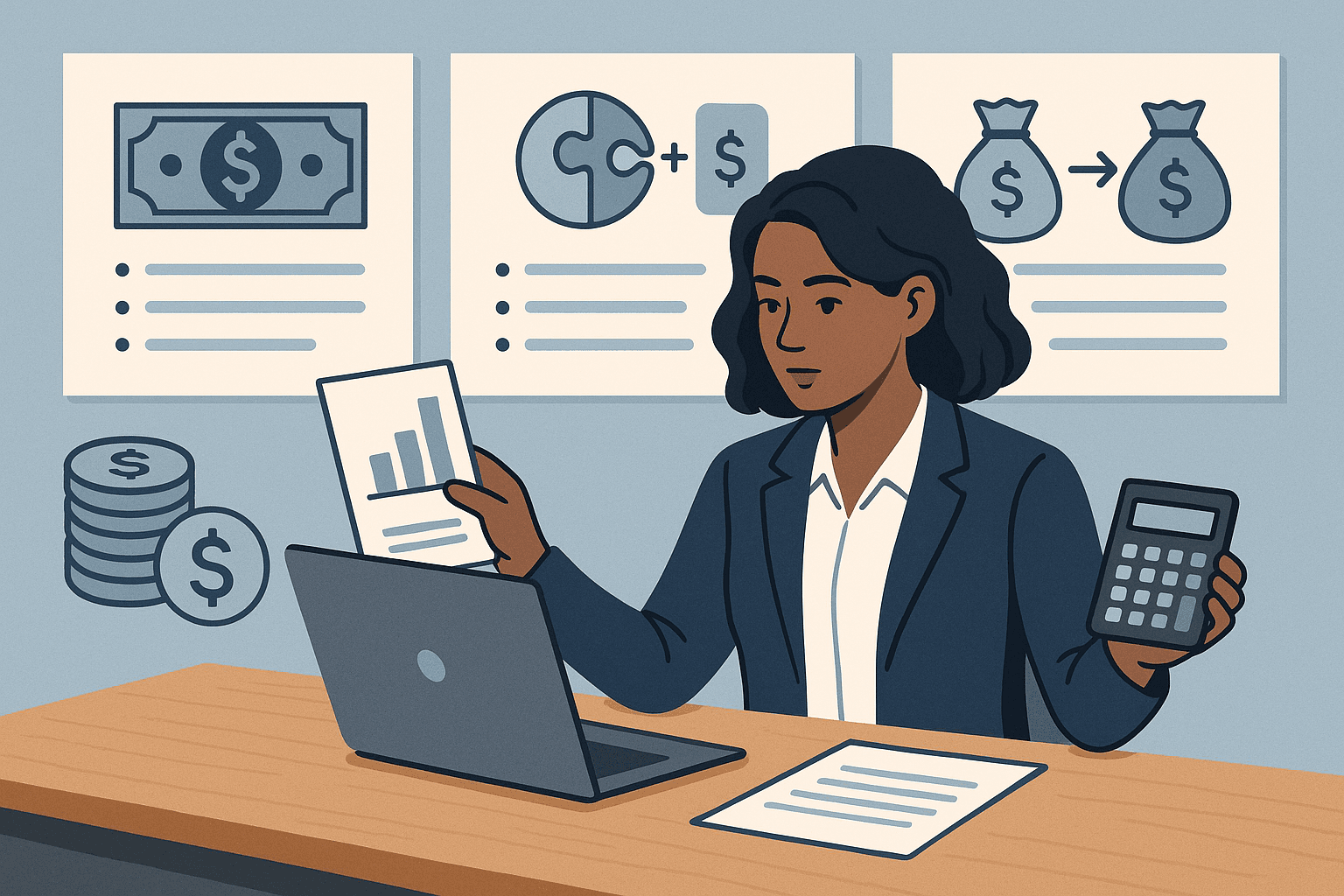
Consolidating debt means combining several balances — credit cards, medical bills, personal loans — into a single payment, ideally at a lower interest rate. Done right, more of each payment goes toward what you actually owe instead of interest, and you have one due date to track instead of five. Done wrong, it can stretch your debt out longer or put your home or retirement savings at risk. Below are the six main ways to consolidate, compared by cost, the credit you typically need, and the risk involved — followed by a simple way to check whether consolidating saves you money. Results vary based on your rate, balance, and credit.
First, A Quick Gut Check
Consolidation is a tool, not a cure. It helps most when two things are true: your new interest rate is meaningfully lower than what you pay now, and you can stop adding new debt to the cards you pay off. If you consolidate and then run the balances back up, you end up with the consolidated loan and the new card debt. There is no judgment here — it is one of the most common ways consolidation goes sideways, and it is avoidable once you know to watch for it.
The 6 Main Ways to Consolidate Debt
1. Balance Transfer Credit Card — Best for Smaller Card Debt You Can Pay Off Fast
A balance transfer card lets you move existing card balances onto a new card with a 0% introductory APR, often for 12 to 21 months. If you clear the balance before the intro period ends, you can pay little or no interest. Watch for the transfer fee (usually 3%–5% of the amount moved) and the regular APR that kicks in afterward. You typically need good credit (around 690+) to qualify for the best offers.
Best for: A few thousand dollars in card debt you can realistically pay off within the promo window.
2. Personal Loan — Best All-Around Option for Most People
A debt consolidation loan is a fixed-rate personal loan you use to pay off your balances, leaving you with one set monthly payment over a set term (usually 2–7 years). The fixed payment makes budgeting predictable, and rates are often lower than credit card APRs for borrowers with fair-to-good credit. There is no collateral, so your home and retirement stay out of it.
Best for: Mid-sized debt across multiple cards when you want one predictable payment and a clear payoff date.
3. Home Equity Loan or HELOC — Lowest Rates, Highest Stakes
Borrowing against your home's equity usually gets you the lowest interest rate of any option here, because the loan is secured by your house. That is also the catch: if you fall behind, you could lose your home. It also turns unsecured debt (which can be discharged in hardship) into secured debt (which cannot, as easily).
Best for: Homeowners with strong equity, stable income, and the discipline to not re-borrow. Approach with real caution.
4. Debt Management Plan (DMP) — Best When Your Credit Is Already Strained
A debt management plan is set up through a nonprofit credit counseling agency. The counselor negotiates lower rates with your creditors and rolls your payments into one monthly amount sent through the agency. You do not need good credit to start, and many agencies offer a free initial session. The trade-offs: it usually requires closing the cards in the plan, and it takes 3–5 years.
Best for: People whose credit has already taken hits and who want structured help rather than a new loan.
5. 401(k) Loan — Lowest Barrier, Real Long-Term Cost
Some retirement plans let you borrow from your own 401(k) and pay yourself back with interest. There is no credit check, and the rate is low. But you are pulling money out of investments that would otherwise grow, and if you leave or lose your job, the balance can come due fast — with taxes and penalties if you cannot repay.
Best for: A last-resort option, and only with a clear, short repayment plan. Most advisors suggest exhausting other routes first.
6. Cash-Out Refinance — Only If You Are Already Refinancing
A cash-out refinance replaces your mortgage with a larger one and gives you the difference to pay off debt. Like a HELOC, it ties unsecured debt to your home and adds closing costs. With 2026 mortgage rates where they are, it rarely makes sense unless you were planning to refinance anyway.
Best for: Homeowners already refinancing for other reasons who can roll in high-interest debt at a better blended rate.
Side-by-Side Comparison
| Method | Typical Credit Needed | Rate vs. Cards | Main Risk |
|---|---|---|---|
| Balance transfer card | Good (690+) | 0% intro, then high | Missing the payoff window |
| Personal loan | Fair–Good (640+) | Usually lower | Fees, longer term |
| Home equity / HELOC | Fair–Good + equity | Lowest | Your home is collateral |
| Debt management plan | None required | Lower (negotiated) | 3–5 years, cards closed |
| 401(k) loan | None required | Low | Lost growth, job-loss trigger |
| Cash-out refinance | Good + equity | Varies | Home is collateral, closing costs |
How to Calculate If Consolidating Actually Saves You Money
You do not need fancy software — just four numbers:
- Add up your current balances and your current total monthly payment.
- Find your current blended interest — roughly, the average APR weighted by balance.
- Get a real quote for the consolidation method you are considering (rate, term, and any fees).
- Compare total cost. Multiply the new monthly payment by the number of months, then add fees. Do the same for staying put. The lower number wins.
Quick example: Say you owe $12,000 across cards at about 24% APR, paying $400 a month — you would pay roughly $4,500 in interest over the payoff. A 5-year personal loan at 13% might run about $273 a month, or roughly $4,400 in interest plus a small origination fee. Lower payment, similar total interest, and a guaranteed payoff date — but stretching to 5 years means you save less than if you kept paying $400 against the loan. The lesson: keep your payment as high as your budget allows, even after consolidating.
Watch the Fine Print
Three things quietly eat into your savings: origination or transfer fees, a longer term that lowers the payment but raises total interest, and any prepayment penalty. A lower monthly payment is not the same as a lower total cost. Always compare the total you will pay, not just the monthly number.
Your Next Step
Pull your balances and APRs into one list, then get one real quote — a personal loan pre-qualification or a free nonprofit credit counseling session is a good place to start, and pre-qualifying usually does not affect your credit. Run the simple comparison above. If the math shows real savings and you can commit to not re-borrowing, consolidation can turn five stressful payments into one manageable one.
MoneySimple is an educational resource, not a lender or financial advisor. Rates and outcomes vary by lender and credit profile.
This content is for educational purposes only and does not constitute financial advice. Consult a licensed financial professional for advice specific to your situation.
MoneySimple may receive compensation from partners featured on this page. This does not influence our editorial opinions or recommendations.
Related articles
More guidance you might find helpful.

6 Best Student Credit Cards in 2026: Ranked for Cash Back and Credit Building
Compare six no-annual-fee student credit cards ranked by rewards, approval accessibility, and credit-building features, with tips for first-time cardholders.
Debt Snowball vs. Debt Avalanche: Which Payoff Method Works Faster?
The debt snowball and debt avalanche methods compared on total interest paid, time to debt-free, and real-world completion rates, plus a hybrid approach that blends both.
How Credit Cards Work: A Complete Guide to Interest, Rewards, Fees, and Choosing a Card
A credit card is a revolving line of credit: you borrow from a bank to pay for things, then either repay the full statement balance by the due date and owe no interest, or carry the balance and pay interest on it. Here's how billing cycles, APRs, grace periods, rewards, fees, and credit-score effects actually work — with current 2026 numbers.
Get smarter about money.
Free weekly tips on credit, debt, taxes, and more.
No spam. Unsubscribe anytime.
