OBBBA Tax Changes 2026: What the One Big Beautiful Bill Means for Your Wallet
A plain-language guide to the 2026 OBBBA tax changes: permanent 2017 cuts, a higher standard deduction and SALT cap, and new deductions for tips, overtime, car loans, and seniors.
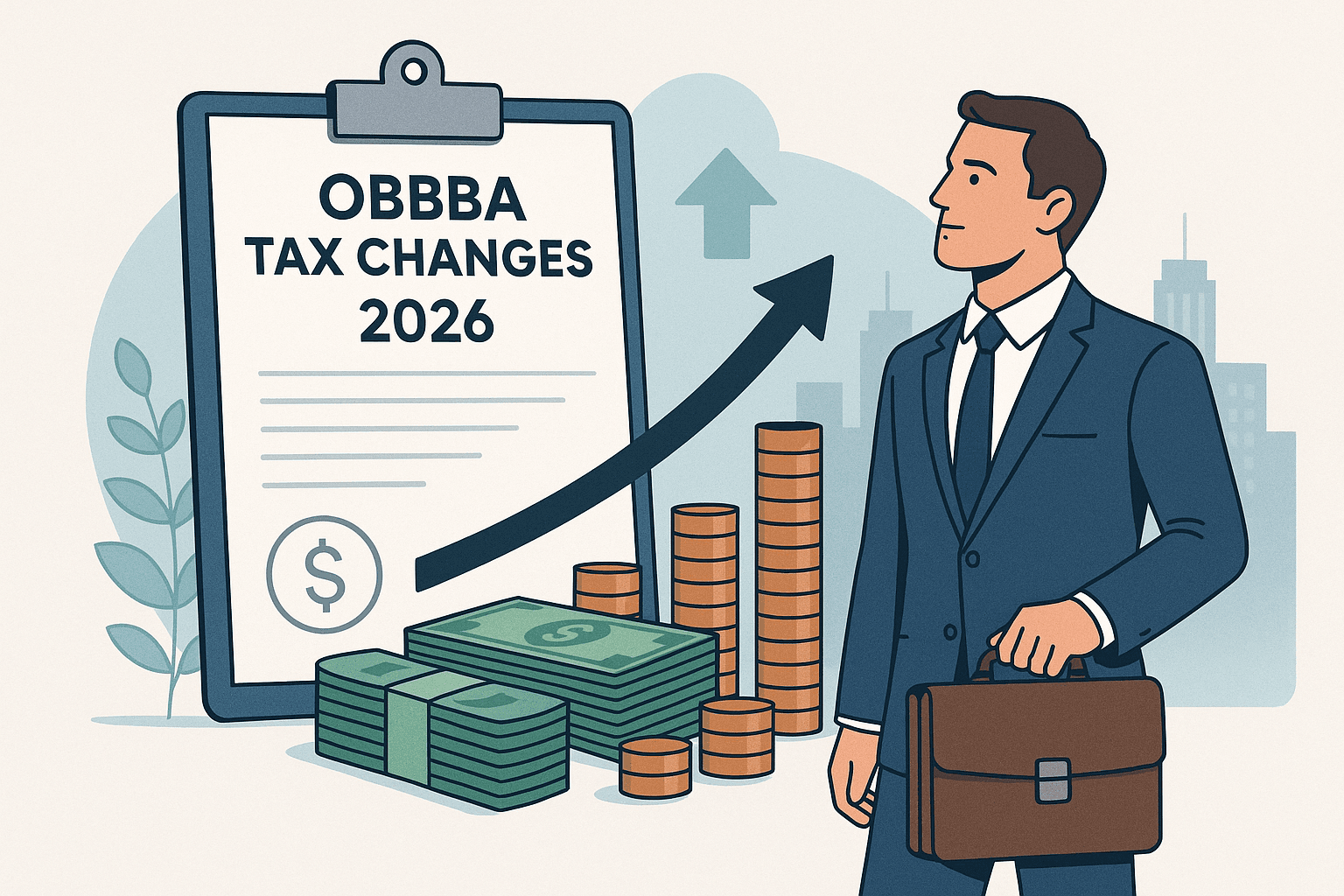
The Big Picture
| Change | What It Does | Who Benefits Most |
|---|---|---|
| 2017 tax cuts made permanent | Locks in lower brackets and higher standard deduction | Nearly all taxpayers |
| New deductions (tips, overtime, car loan, seniors) | Above-the-line deductions for 2025–2028 | Workers, seniors, car buyers |
| Higher SALT cap | Raised from $10,000 to $40,000 | High-tax-state itemizers |
| Permanent QBI deduction | Keeps the 20% small-business deduction | Self-employed, pass-throughs |
Last updated: June 2026. Tax rules change and many provisions have income phase-outs and expiration dates — verify current details at IRS.gov.
1. The 2017 Tax Cuts Are Now Permanent
The biggest structural change is that OBBBA makes the Tax Cuts and Jobs Act (TCJA) framework permanent instead of letting it expire. That means the seven tax brackets — 10%, 12%, 22%, 24%, 32%, 35%, and 37% — stay in place, with inflation adjustments. For most households, this avoids the automatic tax increase that would have hit if the old rules had sunset.
2. A Higher Standard Deduction, Locked In
The elevated standard deduction is now permanent and continues to adjust for inflation. For 2026, it is roughly $16,100 for single filers and $32,200 for married couples filing jointly. Because the standard deduction is so high, the large majority of taxpayers will keep taking it rather than itemizing.
3. New Deduction for Tips
OBBBA created a new above-the-line deduction for qualified tip income of up to $25,000. This is aimed at workers in tipped occupations. It applies for tax years 2025 through 2028 and phases out at higher incomes, so confirm whether your job and income qualify.
4. New Deduction for Overtime Pay
Workers can deduct qualified overtime premium pay up to $12,500 per taxpayer ($25,000 for joint filers). Like the tips deduction, it is temporary and subject to income limits. Only the premium portion of overtime — the extra above your regular rate — counts.
5. New Car Loan Interest Deduction
For the first time in decades, you may deduct up to $10,000 of interest on a car loan, subject to conditions (such as the vehicle being for personal use and meeting assembly requirements). This is also an above-the-line deduction with income phase-outs.
6. New Senior Deduction
Taxpayers age 65 and older get an additional $6,000 deduction per qualifying individual. For a married couple where both spouses are 65+, that is up to $12,000. It phases out at higher incomes and is scheduled to be temporary, so seniors should factor it into near-term planning.
7. The SALT Cap Jumped to $40,000
The cap on deducting state and local taxes (SALT) rose from $10,000 to $40,000, effective for tax year 2025. This is a meaningful change for homeowners and high earners in high-tax states who itemize. The higher cap also has its own income-based limits.
8. Mortgage and Small-Business Breaks Stay
OBBBA made permanent the $750,000 mortgage interest deduction limit ($375,000 if married filing separately) and the 20% Qualified Business Income (QBI) deduction for pass-through businesses. The mortgage insurance premium (PMI) and charitable provisions were also made permanent, and starting in 2026 non-itemizers can take a charitable deduction of up to $1,000 (single) or $2,000 (joint).
Quick Comparison: New Above-the-Line Deductions
| Deduction | Max Amount | Notes |
|---|---|---|
| Tips | Up to $25,000 | Tipped workers; income limits |
| Overtime premium | Up to $12,500 / person | Premium portion only |
| Car loan interest | Up to $10,000 | Personal-use vehicle conditions |
| Senior (65+) | $6,000 / person | Income phase-out |
| Charitable (non-itemizers) | $1,000 / $2,000 | Starts 2026 |
What This Means for Your Wallet
For most households, OBBBA means stability — the lower rates and high standard deduction you have been using are no longer set to expire. If you earn tips, work overtime, recently financed a car, or are 65+, you may have new ways to reduce taxable income, provided you fall under the income thresholds. Homeowners in high-tax states gain the most from the larger SALT cap. The catch: several of the headline new deductions are temporary (generally 2025–2028) and phase out as income rises, so they reward near-term planning.
How We Researched This
This summary draws on IRS guidance, the Tax Foundation, and major tax-preparer analyses of OBBBA (Public Law 119-21). We focused on the individual provisions most likely to affect everyday taxpayers. Dollar figures and phase-outs are subject to inflation adjustment and IRS rulemaking. Last updated: June 2026. We review tax content at least annually.
Frequently Asked Questions
When was the One Big Beautiful Bill Act signed?
It was signed into law on July 4, 2025, as Public Law 119-21.
Did OBBBA raise or lower taxes?
For most households it prevented a scheduled tax increase by making the 2017 cuts permanent, and it added several new deductions. Effects vary by individual situation.
Is the tip income deduction permanent?
No. The tips deduction (up to $25,000) currently applies for tax years 2025 through 2028 and phases out at higher incomes. Confirm current status before relying on it.
How much is the senior deduction?
$6,000 per qualifying taxpayer age 65 or older, subject to income phase-outs.
What is the new SALT cap?
OBBBA raised the state and local tax deduction cap from $10,000 to $40,000, effective tax year 2025, with its own income limits.
Can I deduct car loan interest now?
Yes, up to $10,000 of interest on a qualifying personal-use vehicle loan, subject to conditions and income phase-outs.
Is the QBI deduction still available?
Yes. OBBBA made the 20% Qualified Business Income deduction permanent for pass-through businesses.
Do I need to itemize to claim the new deductions?
No. The tips, overtime, car loan interest, and senior deductions are above-the-line, meaning you can claim them even if you take the standard deduction.
Important Disclosures
This content is for general informational purposes only and does not constitute tax advice. OBBBA provisions include income phase-outs, eligibility conditions, and expiration dates that may change through IRS rulemaking. Dollar amounts are estimates subject to inflation adjustment. Consult the IRS or a qualified tax professional about your specific situation before making any tax decisions.
This content is for educational purposes only and does not constitute financial advice. Consult a licensed financial professional for advice specific to your situation.
MoneySimple may receive compensation from partners featured on this page. This does not influence our editorial opinions or recommendations.
Related articles
More guidance you might find helpful.

6 Best Student Credit Cards in 2026: Ranked for Cash Back and Credit Building
Compare six no-annual-fee student credit cards ranked by rewards, approval accessibility, and credit-building features, with tips for first-time cardholders.
Debt Snowball vs. Debt Avalanche: Which Payoff Method Works Faster?
The debt snowball and debt avalanche methods compared on total interest paid, time to debt-free, and real-world completion rates, plus a hybrid approach that blends both.

How Credit Cards Work: A Complete Guide to Interest, Rewards, Fees, and Choosing a Card
A credit card is a revolving line of credit: you borrow from a bank to pay for things, then either repay the full statement balance by the due date and owe no interest, or carry the balance and pay interest on it. Here's how billing cycles, APRs, grace periods, rewards, fees, and credit-score effects actually work — with current 2026 numbers.
Get smarter about money.
Free weekly tips on credit, debt, taxes, and more.
No spam. Unsubscribe anytime.
